
Description
Product Overview
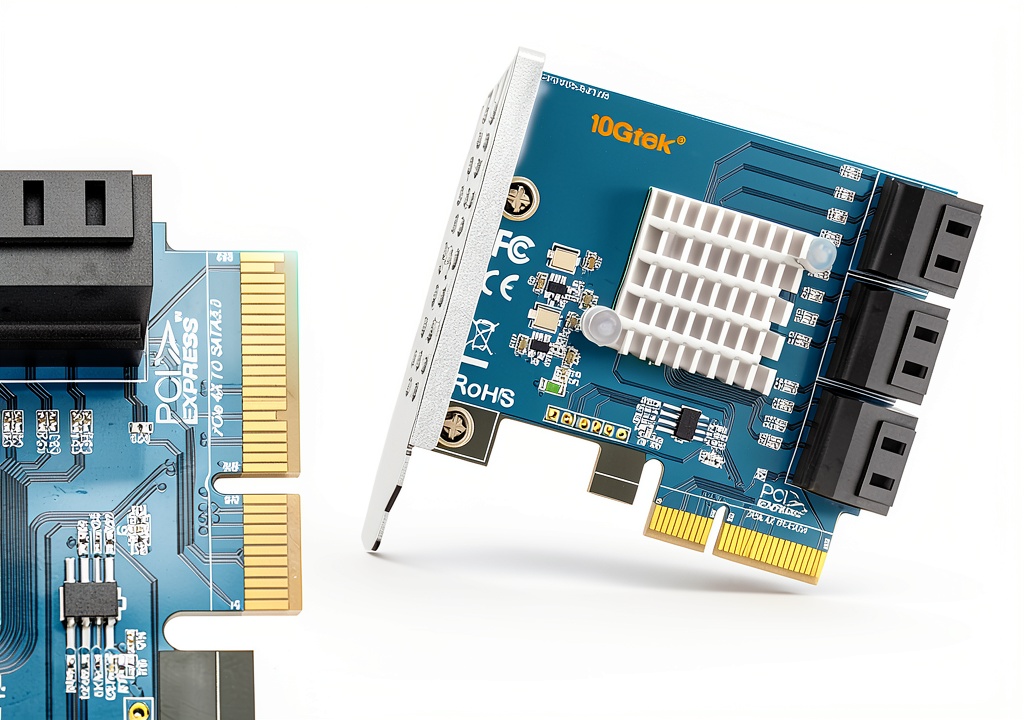
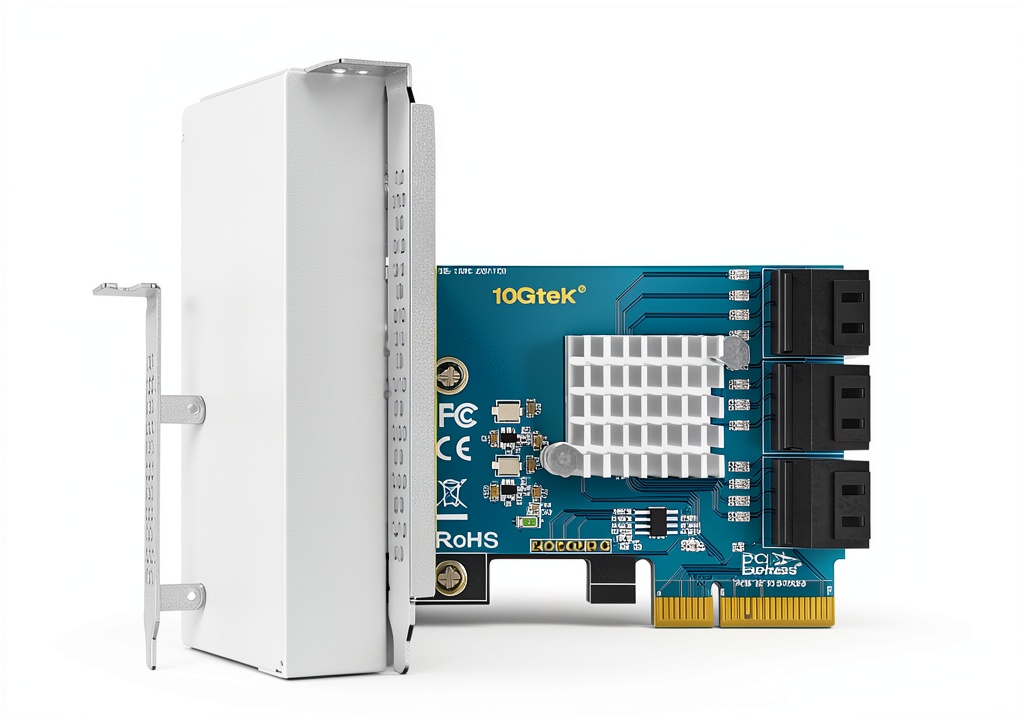
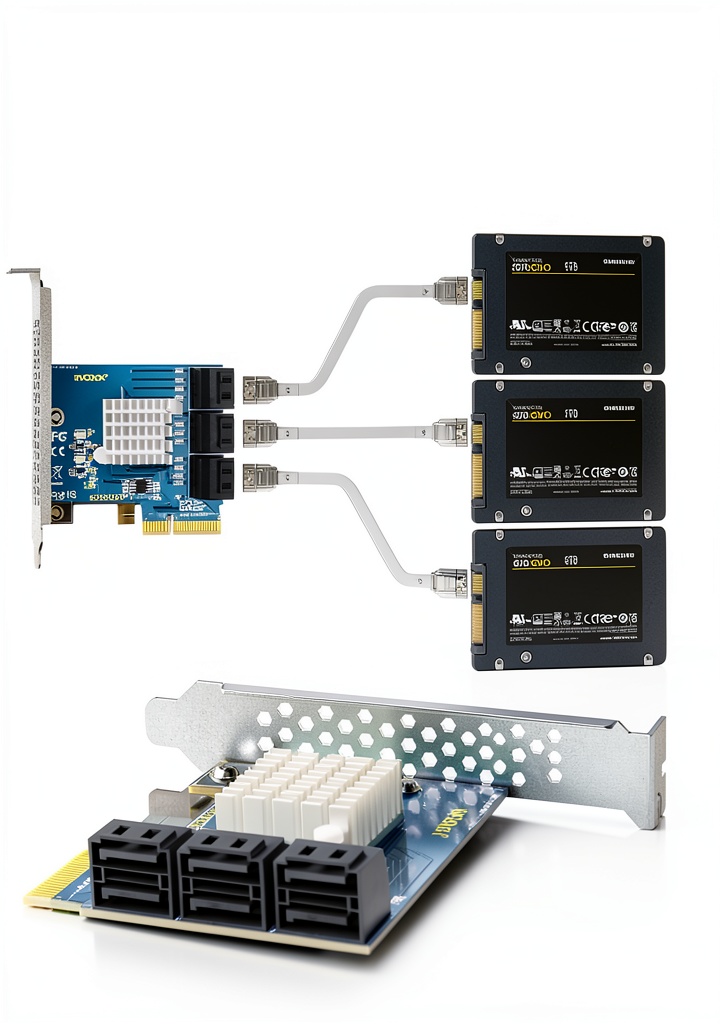
The 10Gtek 6-Port SATA PCIe X4 controller is engineered to bring high‑performance storage expansion to desktop and workstation computers. By integrating six SATA 3.0 ports, the card enables users to attach up to six solid‑state drives or hard‑disk drives, each capable of reaching the full 6 Gbps bandwidth defined by the SATA III specification. The controller is built around the proven ASMedia ASM1166 chipset, which provides stable data transfer, low latency, and broad compatibility with a wide range of motherboards that support PCIe x4, x8, or x16 slots. Its compact design fits both full‑height and low‑profile chassis, and the included 0.5 m SATA cables simplify cable management. Whether you are a content creator needing fast access to large video files, a gamer looking for quick load times, or an IT professional provisioning storage for a server, this controller delivers reliable, scalable performance without the complexity of RAID configurations.
Installation is straightforward thanks to the card’s standard PCIe form factor and the included mounting brackets. Users simply insert the card into an available PCIe slot, secure it with the provided screw, and connect the desired number of SATA drives using the supplied cables. The controller automatically detects each attached device and presents them to the operating system as individual drives, allowing for flexible configuration and easy expansion as storage needs grow. The device is fully compatible with major operating systems, including Windows 7 through Windows 10, Windows Server editions, and a broad spectrum of Linux distributions such as Ubuntu, Debian, CentOS, and Red Hat Enterprise Linux. It also supports virtualization platforms like VMware ESXi, ensuring that virtual machines can directly access high‑speed storage attached to the controller.
Performance testing shows that each SATA port can sustain near‑maximum SATA III speeds when paired with compatible SSDs, while the ASM1166 controller efficiently manages simultaneous data streams across all six ports. The card’s internal architecture employs command‑based port multiplier switching, which reduces contention and maximizes throughput for multi‑drive workloads such as video editing, database indexing, and backup operations. Although the controller does not support hot‑swap functionality, its robust design ensures stable operation under continuous load, making it suitable for both desktop workstations and entry‑level server environments. The low power consumption of the PCIe interface, combined with the efficient data handling of the ASM1166 chip, helps keep system temperatures in check, contributing to overall system reliability.
Thermal management is a key consideration for any high‑performance add‑on card, and the 10Gtek controller addresses this with a copper heat sink that spreads heat across the chipset and the surrounding PCB. The heat sink is designed to work passively, relying on the airflow within the chassis to keep temperatures low, but it can also benefit from additional case fans if the system is heavily loaded. The card’s low power draw, typically under 5 W during full operation, further reduces heat generation, making it suitable for compact builds where cooling headroom is limited. Moreover, the robust metal shielding protects the internal circuitry from electromagnetic interference, which can be especially important in environments with multiple high‑speed devices operating simultaneously.
The controller’s future‑proof design ensures that it will remain useful as storage technologies evolve. While currently optimized for SATA III drives, the ASM1166 chipset is capable of handling emerging NVMe‑over‑SATA solutions, providing a migration path for users who may later adopt newer drive formats. Its support for PCIe 1.0, 2.0, and 3.0 means that the card can be installed in a wide range of motherboards, from older platforms that only offer PCIe 1.0 slots to the latest high‑speed PCIe 3.0 configurations, without sacrificing performance. This flexibility protects the investment, allowing the controller to serve as a long‑term storage expansion option in both personal and professional environments.
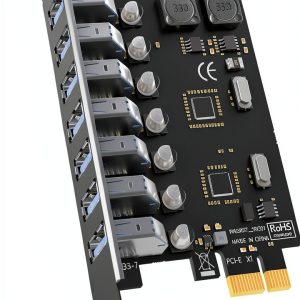
![[Product front view showing all components]](https://www.shopexpos.store/wp-content/uploads/2026/06/a7de6c573bba49299f076fc0b57bac18.jpg)
Usage
The controller is ideal for users who need to add fast storage to a system that lacks sufficient native SATA ports. For example, a video editor working with 4K footage can connect multiple SSDs to store raw clips, project files, and render caches, allowing simultaneous read and write operations without bottlenecking the main system drive. Similarly, gamers can install a dedicated SSD for game libraries while keeping additional drives for recordings and mods, ensuring quick load times and smooth gameplay. In a small business setting, the card can serve as a cost‑effective solution for backing up critical data on high‑capacity HDDs, providing a centralized repository that is easily accessible from any workstation on the network.
Because the controller supports both SATA 3.0 and backward‑compatible SATA 2.0 devices, users can mix newer SSDs with older mechanical drives to balance performance and cost. The card’s compatibility with a wide range of operating systems means that it can be deployed in mixed‑environment labs where Windows, Linux, and BSD machines share the same storage resources. In virtualization scenarios, hypervisors such as VMware ESXi can assign virtual machines direct access to the high‑speed SATA drives, improving I/O performance for database servers or test environments. The controller’s low profile bracket allows installation in compact cases, making it suitable for mini‑ITX builds that still require multiple high‑capacity drives for media servers or network‑attached storage appliances.
While the card does not support hot‑swap, it is designed for stable, continuous operation in environments where drives are installed during system setup and left in place for long periods. This makes it a reliable choice for home labs, content creation rigs, and entry‑level servers that prioritize data integrity over frequent drive changes. The included 0.5 m SATA cables are long enough to reach drives mounted in various bays while keeping cable clutter to a minimum. Users can also take advantage of the full‑height bracket when installing the card in a standard ATX case, or switch to the low‑profile bracket for slimmer chassis, ensuring a clean and professional build aesthetic.
Professional video production houses often require multiple high‑capacity drives to store raw footage, proxies, and final renders. By installing the 10Gtek controller, editors can allocate separate SSDs for each stage of the workflow, dramatically reducing the time spent waiting for data transfers. In a home lab for software development, the controller can host several virtual machine images on individual SSDs, allowing each VM to run with dedicated storage bandwidth and avoiding the performance penalties of shared drives. Small businesses that run a modest file server can benefit from the controller’s ability to attach several large HDDs for backup archives while keeping a fast SSD for active file serving, achieving a balance between speed and cost efficiency. The controller’s straightforward installation and broad OS support make it an attractive upgrade for anyone looking to expand storage without redesigning their entire system.
For backup and disaster recovery strategies, the controller can be paired with high‑capacity HDDs to create a reliable, on‑site archive. Administrators can schedule regular snapshots of critical data onto the attached drives, taking advantage of the controller’s ability to manage multiple disks simultaneously. In virtualized environments, each VM can be assigned its own SSD, ensuring that I/O intensive applications such as databases or web servers receive dedicated bandwidth, while less critical VMs share slower HDDs. This segregation of resources improves overall system stability and prevents a single heavy workload from throttling the performance of other services. The straightforward cabling and plug‑and‑play nature of the card make it easy to integrate into existing infrastructures with minimal downtime.
Why Choose Us
Choosing the 10Gtek controller means selecting a product backed by a brand that focuses on reliable networking and storage solutions. The company’s reputation for delivering well‑tested hardware is reflected in the rigorous quality control processes applied to each unit, from component selection to final assembly. Each controller undergoes extensive stress testing to verify that it can handle sustained data transfers and operate reliably under varying temperature conditions, giving customers confidence in long‑term durability.
The ASM1166 chipset at the heart of the card is a proven solution used in many commercial storage products, offering a balance of performance and power efficiency. Its command‑based port multiplier architecture reduces bus contention, allowing multiple drives to operate concurrently with minimal slowdown. This technology, combined with the card’s support for PCIe 1.0, 2.0, and 3.0 standards, ensures that the controller can be deployed on a wide variety of motherboards, from legacy systems to the latest high‑end platforms.
Customer support is a core part of the 10Gtek experience. Buyers receive access to detailed documentation, firmware updates, and a responsive technical assistance team that can help with driver installation, troubleshooting, and performance tuning. The company also offers a standard one‑year warranty, with options to extend coverage, providing peace of mind for both hobbyists and professional users who rely on the controller for mission‑critical workloads.
10Gtek stands behind its products with a commitment to ongoing support and community engagement. Users can access a comprehensive knowledge base, firmware updates, and driver downloads directly from the company’s website. The technical support team responds promptly to inquiries, offering guidance on installation, configuration, and performance optimization. For enterprise customers, extended warranty options and bulk purchasing programs are available, ensuring that large deployments receive the same level of service and reliability as individual buyers. This dedication to customer satisfaction reinforces the brand’s reputation as a trusted provider of storage and networking solutions.
Key Features
- Six SATA 3.0 ports deliver up to 6 Gbps per drive for fast data access.
- Built on the reliable ASMedia ASM1166 chipset for stable performance and low latency.
- Compatible with Windows, Linux, BSD and major server OSes, supporting PCIe 1.0‑3.0 slots.
- Includes both full-height and low-profile brackets plus 0.5 m SATA cables for easy installation.
- Backed by a one-year warranty and responsive technical support for peace of mind.
FAQ
Can I use both SSDs and HDDs with this controller?
Yes, the controller is fully compatible with both SATA SSDs and traditional HDDs. You can mix and match drives to create a storage solution that balances speed and capacity. SSDs will benefit from the full 6 Gbps bandwidth for rapid data access, while HDDs can be used for larger, less performance‑critical files. The controller treats each drive as an independent device, so the operating system will see them as separate volumes that you can format and manage individually.
What operating systems are supported?
The card works with a wide range of operating systems, including Windows 7, 8, 10, and Windows Server editions, as well as Linux distributions such as Ubuntu, Debian, CentOS, and Red Hat Enterprise Linux. It also supports BSD variants and virtualization platforms like VMware ESXi, ensuring that most environments can take advantage of the added storage capacity without additional driver installations.
Is hot‑swap supported?
Hot‑swap functionality is not supported on this controller. Drives should be connected or disconnected while the system is powered down to avoid potential data loss or hardware issues. This limitation is typical for many SATA expansion cards that rely on the ASM1166 chipset, which prioritizes stable, continuous operation over hot‑swap capabilities.
How do I install the controller?
Installation is simple: power down the computer, open the case, insert the card into an available PCIe slot, and secure it with the provided screw. Choose the appropriate bracket (full‑height or low‑profile) for your case, connect the SATA cables to your drives, and power the system back on. The operating system will detect the new hardware automatically, and you can begin using the additional SATA ports immediately.
Reviews
There are no reviews yet.